
The dark deep web is often shrouded in mystery and misunderstanding, but it plays a crucial role in the digital ecosystem. Unlike the surface web, which is indexed by search engines and accessible to anyone, the dark deep web consists of hidden websites and services that require specific software or configurations to access. Understanding its structure, risks, and purposes can empower individuals with the knowledge needed to navigate this lesser-known part of the internet safely.
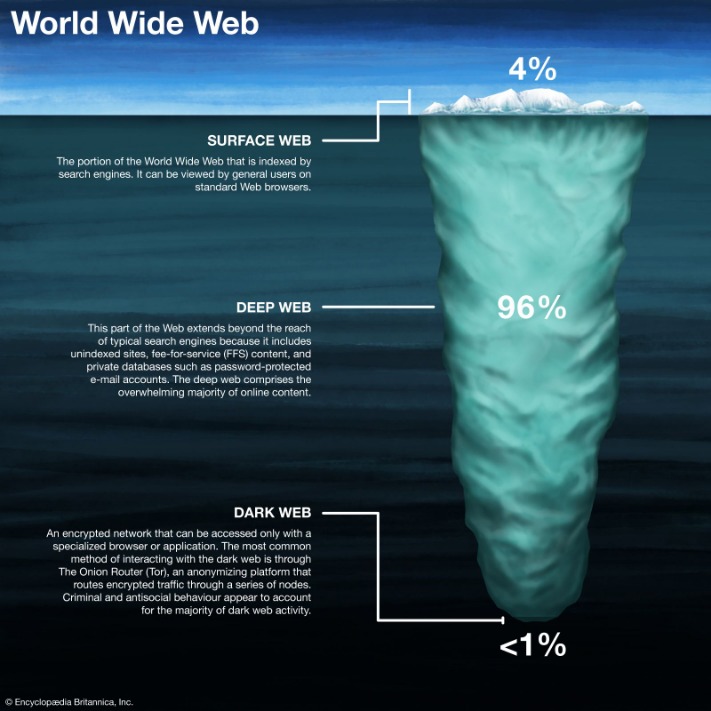
Events like pandemics and geopolitical shifts have driven growth for example, dark web forum activity jumped 44% in early COVID 19 lockdowns. Criminal and antisocial behaviour appear to account for the majority of dark web activity. The sharing of illegal pornography and discussion of illegal sex acts account for a significant portion of dark web traffic. The publicizing of Snowden’s actions led to a global spike of interest in Tor and a resulting rapid expansion of the network’s user base. National Security Agency (NSA) contractor Edward Snowden, who was concerned about the extent of government surveillance, used Tor to coordinate with journalists on leaking 1.5 million classified government documents. Not all mass thefts of data facilitated by the dark web have been motivated by money.
- It is estimated that about 96% of the internet is part of the deep web, while the surface web makes up only 4%.
- Search engines cannot reach these pages, and directories inside the network list them only sporadically, reinforcing a culture of anonymity.
- Recognizing the risks and implementing cybersecurity measures to identify, protect, defend, respond and recover from attacks is your first line of defence.
- The deep web, invisible web, or hidden web are parts of the World Wide Web whose contents are not indexed by standard web search-engine programs.
- A VPN will mask your location and stop the online breadcrumbs that can lead back to you.
- He has a bachelor's degree in English Literature from Durham University, where he also spent a term as editor of the award-winning student newspaper Palatinate.
What is the Dark Deep Web?
- But the so-called "visible" Internet (aka surface web or open web) — sites that can be found using search engines like Google and Yahoo — is just the tip of the iceberg.
- This solution enables security teams to identify and remediate potential threats at the reconnaissance phase, significantly reducing breach risk.
- As a result, it’s replete with illegal and illicit activity, such as drug dealing and arms trafficking.
- These are on the surface web and can be indexed by search engines.
- Use Tails when the stakes—journalistic work, whistle‑blowing, sensitive research—justify a fully compartmentalized environment.
The dark deep web refers to segments of the internet that are not indexed by traditional search engines like Google or Bing. It requires specialized software, most notably Tor (The Onion Router), to access these hidden sites. This part of the web is home to a diverse array of content, including forums, marketplaces, and even blogs, all operating under different levels of anonymity and privacy.
Key Characteristics
- Anonymity: Users often seek privacy for various reasons, including personal privacy, political activism, or even financial transactions.
- Access Restrictions: Most hidden services require specific credentials or can only be accessed through Tor.
- Variety of Content: The dark web hosts a mix of both legal and illegal content, ranging from whistleblower platforms to illicit marketplaces.
Why People Access the Dark Deep Web
The motivations for accessing the dark deep web vary widely:
- Privacy and Security: Individuals in oppressive regimes may use it to communicate freely without fear of surveillance.
- Research: Journalists and researchers often dive into these areas to explore topics not readily available on the surface web.
- Commerce: Some look for goods and services not easily obtained elsewhere, albeit with risk.
- Curiosity: The intrigue surrounding the dark web can also draw individuals seeking knowledge or experiences outside of mainstream society.
Risks Associated with the Dark Deep Web
While the dark web has legitimate uses, it is essential to recognize the inherent risks:
- Legal Consequences: Many activities on the dark web are illegal; engaging in them can lead to severe legal penalties.
- Cybersecurity Threats: Users risk exposure to malware and hacking attempts, which are prevalent in many dark web environments.
- Scams and Fraud: The anonymity of the dark web can attract scammers, making it challenging to verify transactions or services.
How to Stay Safe on the Dark Deep Web
If one decides to explore the dark deep web, it’s crucial to take safety precautions:
- Use a VPN: A Virtual Private Network can help mask your IP address and secure your internet connection.
- Download Tor Safely: Ensure that the Tor software is obtained from its official site to avoid malicious versions.
- Stay Anonymous: Avoid sharing personal information and use pseudonyms instead of your real identity.
- Be Wary of Links: Click on links only from trusted sources as many can lead to harmful sites.
Frequently Asked Questions (FAQs)
Q1: Is the dark web illegal?
A1: Accessing the dark web is not illegal, but many activities conducted there, such as purchasing illegal drugs or weapons, are against the law.
Q2: Can anyone access the dark web?
A2: Yes, anyone can access the dark web using specific tools like the Tor browser, but it requires caution due to potential risks.
Q3: Is everything on the dark web dangerous?
A3: Not everything is dangerous; it also houses legitimate communities focused on privacy, activism, and education. However, caution is necessary.
Understanding the dark deep web is essential in today's digital age. By educating yourself about its functions, risks, and safe practices, you can navigate this hidden world more securely and responsibly.